




Purpose and Scope
CDEs may address referral questions including:
Diagnostic clarification when existing assessments are inconclusive, incomplete, or disputed
Presence, severity, course, and prognosis of medical, psychiatric, or substance use disorders
Behavioral, judgment, or performance concerns in the workplace
Cognitive functioning, insight, reliability, and other factors relevant to professional function
Treatment or remediation needs and recommendations for monitoring
When combined with an FFD assessment, the functional significance of identified conditions and readiness for return to practice
Each examination follows a structured process that may incorporate record review, clinical interview, psychological or cognitive testing, collateral information, and consultation with specialists when indicated.
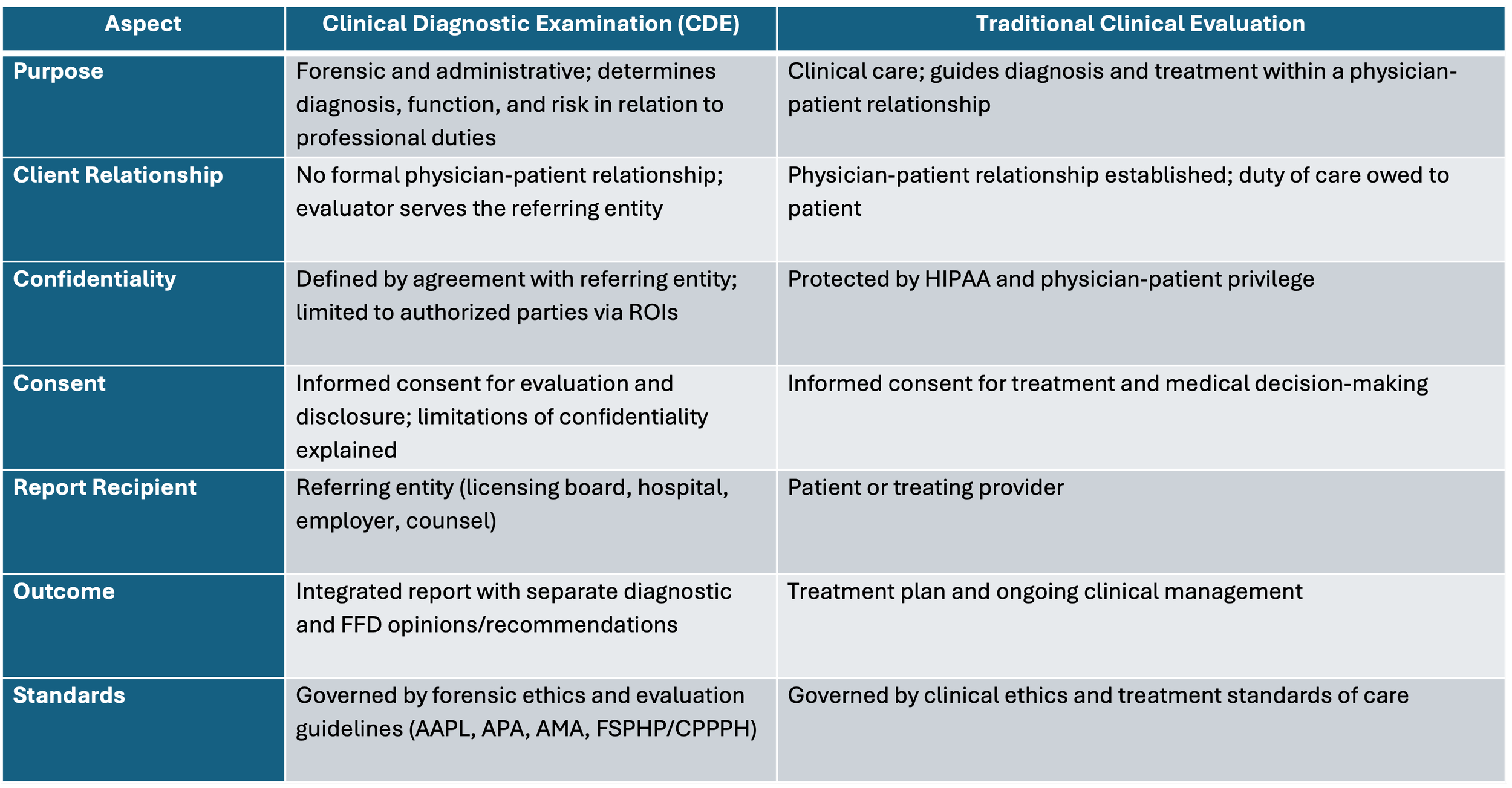
Distinguishing CDEs from Traditional Clinical Evaluations

- Clinical Diagnostic Examinations -
Objective. Comprehensive. Defensible.
Clinical Diagnostic Examinations (CDEs)—also referred to as Independent Diagnostic Evaluations (IDEs)—are comprehensive assessments designed to clarify diagnostic, behavioral, and functional questions when a healthcare professional’s health, conduct, or judgment may affect professional practice.
Unlike an ordinary clinical evaluation, a CDE is an independent, non-treatment examination conducted for a specific administrative, regulatory, employment, or legal purpose. It does not establish a treating physician-patient relationship. The evaluator's role is to provide an objective analysis addressing the questions posed by the referring entity.
CDEs frequently include a Fitness-for-Duty (FFD) component, integrating diagnostic and functional findings within a single evaluation. This permits separate but related conclusions regarding the presence and significance of a condition and whether—and to what extent—it affects the individual's ability to practice safely and effectively.
Structure and Deliverable
When a CDE includes fitness-for-duty questions, diagnostic and functional findings are integrated within a single comprehensive report, with distinct conclusions addressing diagnostic formulation, professional function, fitness for duty, and recommendations as appropriate.
Evaluations are informed by relevant professional and ethical guidance, including:
American Medical Association (AMA) Code of Medical Ethics, Opinion 1.2.6 (Workplace Evaluations)
American Academy of Psychiatry and the Law (AAPL) Ethics Guidelines
APA Specialty Guidelines for Forensic Psychology (2013)
Federation of State Physician Health Programs (FSPHP) Guidelines
California Public Protection & Physician Health (CPPPH) Evaluation Standards
Clinical Expertise Within a Forensic Framework
CDEs occupy the intersection between clinical medicine and the administrative, regulatory, and legal environments in which decisions about professional practice are made. They require diagnostic expertise while maintaining the independence, defined confidentiality boundaries, documentation, and objectivity required of a non-treatment evaluation.
This distinction allows clinically complex information to be translated into findings and recommendations that directly address the questions confronting the referring entity.